
By Lisa Reisman
A fellow once told me that a ticket scalper makes more money the further away he is from the game venue. The logic is that the buyer doesn’t know the daily market price for a ticket because nobody else has accosted that buyer advertising the price of a ticket. And so, if the buyer is trying to get a seat for a 2007 late season Cubs game, he may just buy the first ticket that comes his way because he doesn’t want to risk not getting a ticket. Subsequently, he likely overpays for that ticket. The lesson is this – the closer you are to the source of information, the greater likelihood of not overpaying.
And what does scalping baseball tickets have to do with today’s electronics industry? The closer your operations / purchasing organization is to the underlying commodity or raw material trends, the greater likelihood of not overpaying. Of course it also helps to have a good seat (this is akin to having a bag of sourcing strategies at one’s disposal). But what we are really driving toward is using some of this underlying information to better negotiate with suppliers.
Let’s take for example, metals. A full range of metals are used throughout the electronics industry. From the aluminum used in fans for Intel processors (extruded alloy material) to titanium used for stereophones and high-end laptop chassis, the underlying metals can greatly affect the price one pays for components and assemblies.

In March of this year, it was reported that China, the largest producer of tin, may reduce exports by 10%. Tin is needed to solder electronic components. What types of strategies could an electronics manufacturing services (EMS) provider or OEM deploy to mitigate this potential price increase? One effective strategy (if deployed in a timely fashion) may involve locking up tin supplies in a long-term contract just prior to, or around, the time of this announcement. But without knowing the underlying information, a company will likely have been hit with tin price increases.
Additionally, also earlier this year, copper; lead and silver each increased in price which negatively impacted savings for items such as wire harnesses or connectors. But copper futures are now sliding due to housing worries and credit problems in the United States. From a sourcing standpoint, this implies that for companies who held off sourcing these types of products in Q207, it may soon be a good time to think about re-sourcing these categories.
The following chart shows the trend line for copper:
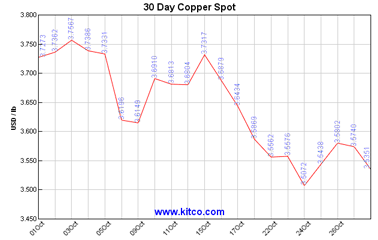
The most recent copper spot chart can be found here.
In general, base metals have come down to where they were 12 months ago. This means that any company that has seen a price increase throughout the course of this year due to base metal price increases, may be able to re-negotiate or take back some of these margin points. Nickel is down by nearly 50% from the beginning of 2007. Monitoring these trends can allow companies to re-negotiate pricing for capacitors.
Get list of EMS manufacturers for your requirements (Its free)
Save time and money. Find quality EMS manufacturers. Fast. Venture Outsource has a massive, global database of contract electronic design and manufacturing capabilities. Speak with a Provider Advisor.
“Was able to very quickly find details on the important elements of setting up EMS and ODM partnerships, talked with an advisor for personalized info on quality providers matching our requirements while getting up to speed quickly about the industry and connect with key staff from like-minded companies and potential partners. Great resource.”
— Jeff Treuhaft, Sr. Vice President, Fusion-IO
Advisors tell you matches we find for your needs, answer your questions and, can share EMS industry knowledge specific to your industries and markets.