
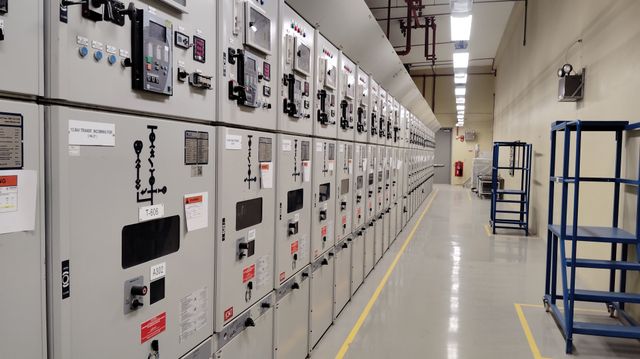
Most procurement teams track electronics tariffs and metals tariffs as separate line items managed by separate people. Section 301 lives with the component sourcing group and Section 232 lives with the structural and mechanical team.
Problems surfaces when imported products contain both and for industrial electronics it’s more the default than the exception. Control panels ship in steel enclosures while power supplies mount inside aluminum chassis, and variable frequency drives bolt into sheet metal cabinets. When these products are shipped from China both tariff programs can apply to the same shipment and the combined duty rate exceeds what either team is modeling independently.
Two tariff programs, one customs entry
Section 232 tariffs imposed under national security authority apply 25% duty on steel imports and 10% on aluminum imports. These rates cover raw material, semi-finished forms, and fabricated articles.
Section 301 tariffs applied under trade authority, specific to China, add 25% on List 3 goods which is a category covering most Chinese-origin industrial electronics including control panels (HTS 8537), power supplies and transformers (HTS 8504), and electric motors (HTS 8501).
Tariff stacking, for example, can occur when a Chinese-origin programmable logic controller housed in a fabricated steel enclosure arrives at a US port. The PLC assembly faces 25% Section 301 duty on its declared value as a Chinese-origin electronic control unit. If the steel enclosure classifies separately, as a steel fabrication under HTS 7326 or as a mounting cabinet under a related heading, the enclosure portion faces 25% Section 232 duty on steel.
The combined effective rate on the total shipment can exceed 30%, depending on how customs value splits between the electronic and structural components.
Enclosure material drives classification
Tariff classification for industrial electronics assemblies is not always straightforward. A control panel in a steel housing can classify as a complete functional unit under HTS 8537 and in this case the enclosure is part of the electronics classification and faces Section 301 rates as a Chinese-origin product.
Alternatively, if the enclosure ships separately or qualifies as a distinct article of steel, it classifies under Chapter 73 and faces Section 232 rates independently.
SEE ALSO
Industrial electronics tariff exposure compounds across 15-year product lifecycles
The distinction matters because Section 232 applies based on material composition regardless of country of origin, while Section 301 applies based on country of origin regardless of material.
A steel enclosure from China can theoretically face both, 25% Section 232 tariff as a steel article plus 25% Section 301 as a Chinese-origin good.
Determining if CBP applies both depends on the specific classification ruling and how the entry is structured.
In accurate, total landed costing models, we see this create real confusion.
A procurement team prices a motor drive assembly from a Chinese supplier at the quoted FOB plus 25% Section 301. This is pretty straightforward. The steel enclosure and mounting hardware arrive against the same purchase order, and the team applies the same 25% assumption.
But the enclosure may carry Section 232 duty as also, or instead, depending on classification.
The actual landed cost differs from the model and the variance shows up as an unexplained cost overrun in the quarterly reconciliation.
Separate line items require separate lookups
Industrial electronics procurement involves mixed-material BOMs by nature and a single supplier shipment might include electronic assemblies under HTS 8537, power conversion equipment under HTS 8504, electric motors under HTS 8501, and fabricated steel mounting hardware under HTS 7326.
Each comes with different base duty rates, different Section 301 applicability, and different Section 232 exposure.
Applying a blended tariff assumption across the purchase order guarantees the model is wrong on most line items.
The only reliable approach is per-HTS-code duty verification. An *industrial electronics tariff rate lookup* returns the current rate, Section 301 status, and Section 232 applicability for each 10-digit classification in the order.
Running each line item through the lookup identifies where stacking occurs, which components carry the highest combined rates, and where enclosure material choices are quietly adding 10 to 25 points of duty most teams are not tracking.
The gap between electronics tariff and metals tariff is where stacking hides. Industrial electronics sit in the middle of both programs and the cost of not checking is a landed cost model consistently underestimating actual duty exposure.